
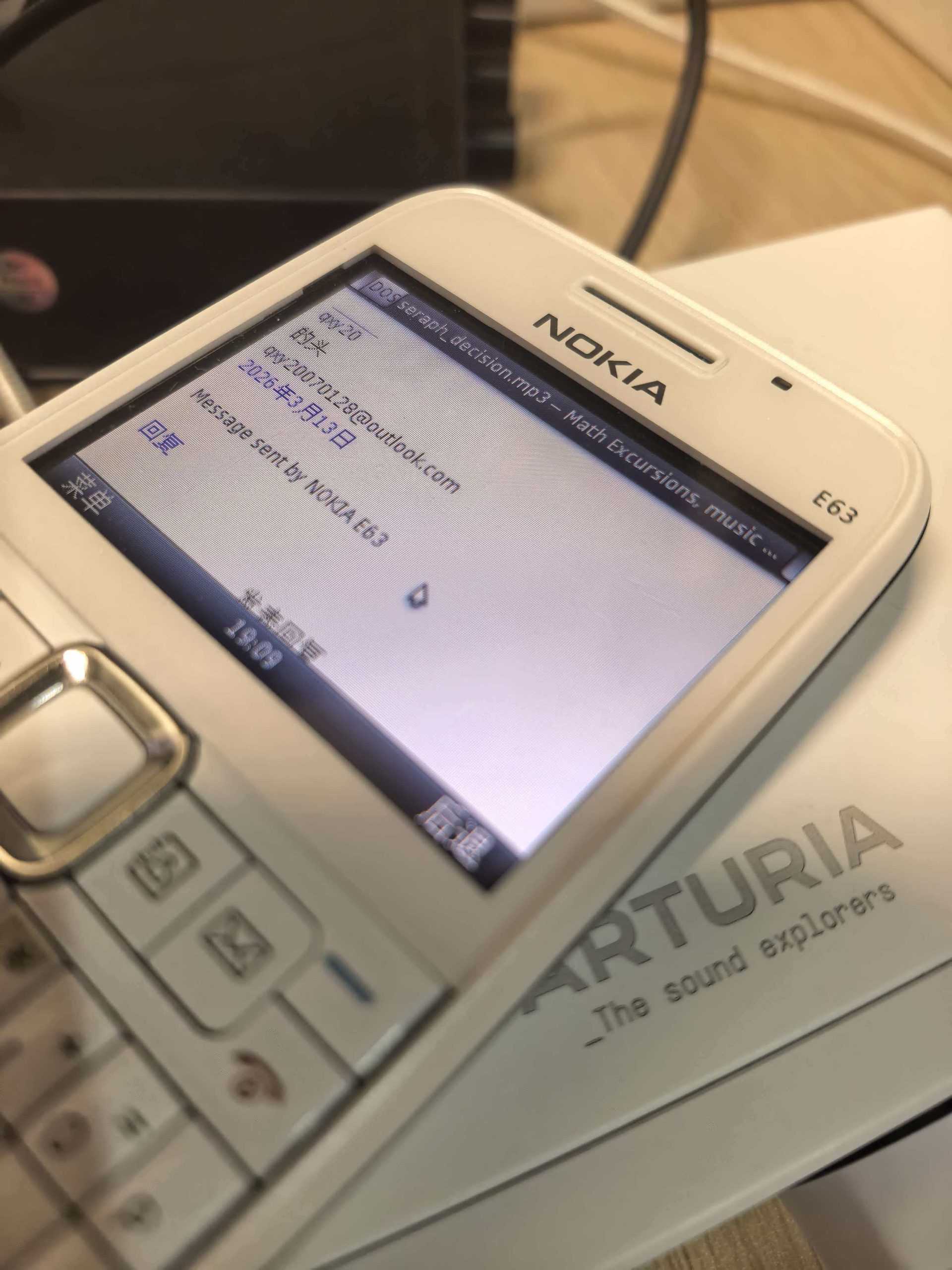
I’ve always had a particular fondness for old things, especially vintage electronics—cassette players, old mobile phones, and the like. Although I never lived through the eras when these items were at their peak, acquiring and interacting with them gives me a unique sense of nostalgia, one that feels both unfamiliar and strangely personal. Owning these objects is like stepping into a magical realist novel, where the old and the new clash yet coexist in unexpected harmony. The modern knowledge I possess often doesn’t apply to these relics—they operate on entirely different systems, and without the patience to tinker with them, they’d just be dismissed as worthless e-waste. Fortunately, I enjoy tinkering—especially with items that straddle the line between “useful” and “junk.”
More often than not, my appreciation for these old objects goes beyond their physical form; it’s about the ideas they represent. For instance, I already own a Walkman, yet I still buy vinyl records simply because I love the tactile experience of music—it makes me feel like music still matters in a tangible, historically significant way. Then there are my two watches: both birthday gifts, one a mechanical watch and the other a smartwatch. The mechanical watch was too bulky, so I quickly set it aside. The smartwatch is nearly perfect—it can measure almost anything, even perform basic health checks. I was genuinely satisfied with it, but the moment I laid eyes on the Casio F-91W, it fell out of favor. It’s a cheap, reliable, and utterly ordinary digital watch. Perhaps driven by an almost fanatical desire for minimalism, I bought it. Returning to the pure, unadorned function of timekeeping reminded me of the cheap digital watches I wore as a child—only now, it feels more reliable and carries a deeper symbolic weight.
But the object that left the strongest impression on me is the Nokia E63—a full-keyboard phone that was considered a flagship in its day. My version is pure white, with the entire outer shell replaced by a cleaner, brighter variant. It runs on Symbian 9.2 S60 3.1, a remarkably robust operating system for its time. It boasts impressive expandability and even supports 2.4GHz Wi-Fi. I spent hours browsing Symbian forums, rediscovering games I’d played as a kid or ones that looked fun. What surprised me most was that, by today’s standards, such a seemingly underpowered device could run many 3D games smoothly. It comes pre-loaded with the Quickoffice suite, which is fully compatible with Microsoft Office, meaning you can edit documents, write stories, create spreadsheets, and even make PowerPoint presentations on this tiny screen!
The phone also offers surprisingly modern functionalities. With CorePlayer installed, watching TV shows and videos is no problem; Opera Mini lets you browse HTML5 websites with ease (though most open in compatibility mode). You can even write Python programs, customize themes, or edit simple videos on it. As a feature phone, its performance is clearly overkill; as a smartphone, with enough effort, it can almost keep up with modern life. I once wrote articles on this phone, though sadly, they were lost along with the external storage card. But when I dug it out recently and logged into the website you’re reading now, I was amazed to find I could still browse and comment. It gave me a genuine sense of comfort.
I own many phones, tablets, and computers, but for some reason, none of them compare to these so-called “treasures” in my heart. Times have changed; everything has become subscription-based. The tangible, touchable things are drifting further from our daily lives, while internet giants control everything. This unique sense of nostalgia, kept alive by these old objects, refuses to leave me. It also reminds me of my childhood—a simpler, more innocent time.
发表回复
要发表评论,您必须先登录。